Showing posts with label racism. Show all posts

Sunday, May 16, 2010

Sex and a City of Hot Asian Men


Last night, a good friend of mine hosted a Sex and the City party, in which we wore our cutest shoes, drank girly cocktails and watched our favorite episodes of the series. Revisiting the series reminded me of how neatly it manages to encapsulate the thrills and frustrations of being a single woman. The "A Woman's Right to Shoes" episode points out how much money I've spent on friends' weddings and baby showers, and dares me to register for gifts so that all those bitches have to validate my life choice of getting a PhD. (After all, the 8 years I took to get the degree is longer than the duration of any of their marriages so far.) I also can't help but applaud when Carrie goes on her rant after being dumped via Post-It note. As a woman whose last long-term relationship ended with the guy breaking up with me over the phone and then never talking to me again, and as as single gal who recently went on a date that ended with the guy giving me a Christian side hug, I also think that an ending that is thoughtful and decent shouldn't be too much to ask for. I guess the fact that so many women could relate to the show, in spite of its fantasy-creating glamour, is what made it successful.

But as much as I relate to the show, and as much as I've caught myself in conversations where somebody says, "Oh, this is like the SATC episode where...", there's also something incredibly alienating about watching it. Part of it is class, of course. I don't know anyone in their 30s who can live the kind of lifestyle that these women do on the show. Plus, there's the show's unbearable whiteness of being. The four leading ladies are white. All their friends are white. All the passersby in the background whenever they go shopping, eat at trendy restaurants, or attend club openings are white. They all end up with white men (unless you count Charlotte's Jewish husband as non-white). And with the exception of a few men of color (like the truly drool-worthy Blair Underwood), all the men they fuck are white.

And this is what truly bothers me: Not once in the entire series or subsequent films does any one of the ladies date or fuck an Asian man. (Samantha does spend one episode lusting after her South Asian yoga instructor, but the entire episode is also about the fact that she CAN'T fuck him because he's taken a vow of celibacy. Of course.) The lack of Asian beefcake on the show is not so surprising. Asian men don't get represented as sexy or desirable in American popular culture, and perhaps the most famous Asian man who has circulated through American media in recent years has been, lamentably, THIS GUY. And THIS GUY is not much better. Latino men have the macho Latin lover stereotype going for them. African American men, stereotyped as having big penises, produce catchphrases like, "Once you go black, you can't go back." Asian men, however, are small and anemic computer nerds who wouldn't know how to navigate a woman's body with a map and a flashlight. Asian men have no place in the world of Sex and the City.

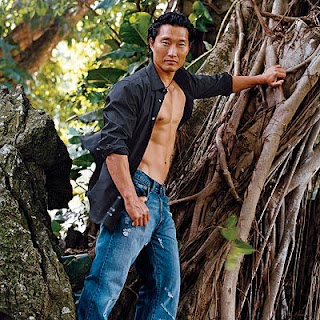
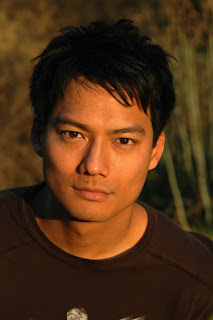
As an Asian woman who has known quite a few hot Asian men, and who's always looking out for my Asian brothas, I present the following evidence of what the makers and viewers of Sex and the City have been missing out on:



Daniel Henney


Daniel Dae Kim


Naveen Andrews



John Cho


Sendhil Ramamurthy



Victor Basa


Russell Wong


Hidetoshi Nakata



Aaron Kwok


Rick Yune


Archie Kao



Johnny Tri Nguyen



Takeshi Kaneshiro


Holy hotness. What heterosexual woman of any ethnicity wouldn't want to tap some of that? Here's what I propose: If the Sex and the City movie franchise were to end in a trilogy, the last installment should feature no men BUT hot Asian men. That's my idea of a thoughtful and decent ending. In fact, I'll volunteer to write the screenplay. And work as the casting director.


Sunday, May 2, 2010

Fuck You, Arizona


Dear Arizona,

You really are on a roll, aren't you? First you push SB 1070, which I don't find all that surprising. After all, the atmosphere in your state is such that angry white folks who call themselves "Minutemen" have felt empowered to dress up as law enforcement officers and murder innocent people (including a 9-year-old girl) in the name of "homeland security" and "border control." Of course you're going to enact an immigration law that gives local law enforcement officers the right to determine the citizenship status of anyone they detain or arrest. Before I find myself driving through your state, I'll make sure to tattoo my social security number on my ass. Just in case I get pulled over for speeding or something. Because lord knows that Asian folks don't look sufficiently "American" enough, either.

So to ride on the momentum of that racist bullshit, you decide to also pass HB 2281, which prohibits schools from offering courses that "are designed primarily for pupils of a particular ethnic group" or "advocate ethnic solidarity instead of the treatment of pupils as individuals." Not that the language of the bill explicitly says this, but HB 2281 effectively bans ethnic studies programs, such as the Tucson public school district's Mexican American Studies program. Reasons for targeting ethnic studies? The state superintendent has called such programs "ethnic chauvinism," and state senator Russell Pearce, the architect of SB 1070, calls ethnic studies "hateful speech" and "sedition."

As an instructor of Asian American Studies, I have to lament the passing of 2281, not because I had hoped to get a job as one of your teachers (hell, I'd sooner live in Texas), but because the racial tensions and rampant anti-immigrant sentiments in your state indicate that now, more than ever, is precisely when ethnic studies curriculum is needed.

First, let's just establish that ethnic studies is not now, nor has it ever been, an advocate of "ethnic chauvinism" or "hateful speech." It is the opposite of those things. As a discipline, ethnic studies was established by students, teachers, activists and community organizers who opposed racism in all its forms, advocated for human rights regardless of privilege, and recognized the experiences of all Americans, regardless of ethnicity, as having a legitimate place in American history. Yes, an ethnic studies curriculum is going to educate people on the fact that the 1790 Naturalization Act explicitly declared that only white male persons could apply for citizenship rights, that the Treaty of Guadalupe Hidalgo ceded a large chunk of Mexico to the United States in 1848, that the 1882 Chinese Exclusion Act was the first of many race-based immigration bans to be enacted in the United States, that it wasn't until the 1952 McCarran-Walter Act that race-based and national origins-based immigration legislation even began to be overturned. To teach these historical facts is to acknowledge the existence of white privilege, but to acknowledge the existence of white privilege is not equal to teaching hate. In fact, closer to teaching hate is the refusal to acknowledge this side of American history, for it is precisely ignorance that allows people to shout with anger and entitlement, "We need to keep 'our' country away from 'them'."

While we're on the topic of collective identification, let's touch upon the second gripe I have with HB 2281, which is its implication that "ethnic solidarity" is the antithesis of individuality. Ethnic studies is not just for "ethnic" people. In fact, it serves its purpose of equality and empowerment best when it reaches out to all people. To get rid of ethnic studies altogether does not treat each pupil as an individual. On the contrary, it erases the individual histories and experiences of so many people in America and serves one prominent collective: namely, white Americans. What collective are we identifying when we speak of "our" Founding Fathers? Do we not assume a collective identification when we study our Constitution, which begins with the words, "We the People"? I understand that buzzwords like "individualism" are a handy way to promote "American" values and undermine anything that smells of pinko-commie-socialism, which any critique of our hegemonic social order seems to be associated with. I'm just saying that that supposed opposition is a fallacy. As people who live and work within America's borders, regardless of our citizenship status, we are always called upon to be a part of collective. There's nothing seditious about acknowledging the different ways in which we experience being Americans at the same time that we respond to that call.

Though if I had known that ethnic studies was about overthrowing the government, I probably could have made my courses a lot more interesting...

So this is just my long-winded way of saying, Fuck You, Arizona. Go ahead and practice your racist laws and your historical amnesia. I can only hope that more of your brave citizenry will resist this kind of injustice and stupidity.

Sincerely,

Me


Tuesday, February 23, 2010

Asian Girl Professors Everywhere

I TA-ed for an Asian Girl Professor (that is, a young-ish Asian American female professor) who told me that it is really really hard to become an Asian Girl Professor. Asian American women are the least likely to finish their PhD programs, least likely to get hired, least likely to get promoted, least likely to get tenured, least likely to get endowed chairs, etc...

I do not know if this is true. I imagine there must be some research done on attrition rates in higher education and the demographics of university educators that might confirm this, but I'll let people who specialize in that sort of thing dig that out. True or not, this depressing statistic certainly feels true. I've had many White Dude Professors. And White Women Professors. But until I took a seminar with a South Asian woman who at the time was a junior faculty member a few years ago, I had never been taught by an Asian woman.

I knew that Asian female professors existed in my undergraduate institution. And I see them where I am attending graduate school. But I am also aware of the fact that both schools belong to a university system in which there is such a thing as Ethnic Studies and/or Asian American Studies. Indeed, all the professors I know who happen to be Asian American (including the one who warned me of how difficult it is to be an Asian woman in academia) either belong to an Asian American Studies/Ethnic Studies department or are the token Asian American specialist in a department like American Studies or English. In the position that I will be starting in the fall, I will be one of two Asians (the other is a South Asian man who does Postcolonial Studies), and certainly the only Asian woman in the English department. I was hired as an Asian American literature specialist.

So, as one can imagine, in most universities in the U.S., there isn't a need or demand for even that token Asian Americanist. This means that in most universities, there are no avenues through which Asian folks can break into the academy. East Asian Studies might be an exception, but only to a certain degree-- Universities will often have departments devoted to studying China, Japan, Korea, etc. So Asian women may be hired there. Though also, from what I've seen, these departments also hire a lot of white people who specialize in Asian Studies. Aforementioned Asian Girl Professor, for example, was the first Filipina to be hired as a tenure-track professor specializing in the Philippines. Prior to her, folks doing work on the Philippines have been white men. (Damn colonialism.) So yes, if you are Asian and American, finding a place in academia can be tricky. There are some who manage to make it into the profession without doing anything Asian or Asian American related-- I know one young-ish Asian American professor who does Medieval Studies, for example. But if universities won't hire Asian folks as experts of Asian history and culture, I imagine they would be even less inclined to hire them as experts of white history and culture. Racism sucks.

Aside from these institutional factors, Asian women also have to deal with the day-to-day experiences of being, well, Asian women. It's not only my mother who says that I look like a little girl pretending to be a professor. Colleagues, professors, even my students often view me in that way. A classmate of mine, a white woman who is only a few years older than me, used to always comment on my small stature and pat me on the head. Students will often ask me how old I am. (I doubt they'll ask their Old White Dude Professor the same question.) At a recent job interview, one faculty member mistook me for an undergraduate. Here's the funny thing, though-- I actually don't think I look all that young. I see the faint lines forming at the edges of my eyes, the white hairs popping out of my head. I look exactly as one my age should look, I think. I don't dress like a teeny-bopper or talk with a baby voice. So I know that people's tendency to view me as a little girl is a projection of their own internalized notions about Asian women being young and docile or whatever. Orientalism sucks.

I've learned to not get too angry when these things happen, and to just accept them as a fact that I'll just have to deal with and negotiate. Still, I wonder to what extent have I internalized how people seem to view me. I wonder if I've ever underestimated myself or failed to fight for my interest because I felt marked as an Asian girl. And I wonder to what extent I've grown a chip on my shoulder because of it.

Every quarter that I've taught at Yuppie Cowtown U, a school in which a disproportionately large portion of the undergraduate population is Asian American, there has always been at least one student, usually Asian, usually a girl (but sometimes a boy), who comes to my office. She won't ask me questions about the course material, but about my life trajectory. She'll ask me how I decided to major in English, to go to grad school, to become a professor. So I know that at least for her, my being an Asian Girl Professor at the podium, in a position of authority, relaying my expertise, commanding attention, means something, just as my meeting other Asian Girl Professors means something to me.

So I guess that's why I've named this blog Asian Girl Professor-- I know that my breaking into this profession is indebted to the work of Asian women who came before me, and I hope that my making it will also enable other Asian women to do the same.