Showing posts with label asian american. Show all posts

Saturday, April 23, 2011

AsianGirlProf's (Mis)Adventures in Dating

A few years ago, there was an emergence of Asian American chick lit, with the release of books such as Kim Wong Keltner's The Dim Sum of All Things, Blossom Kan's China Dolls, and Sonia Singh's Bollywood Confidential. These novels are modeled after Sex and the City and Bridget Jones's Diary, but with Asian female protagonists. They center on 30-something-year-old professional women who enjoy designer shoes and fancy martinis, and who create adventures for themselves dating a bevy of (mostly non-Asian) men. Not exactly an original formula, and as the titles indicate, these books are also generally poorly written. Several of my Asian American girlfriends told me that I should have ridden that wave and written my own chick lit novel as a way to vent my dating frustrations. Too bad I was busy writing my dissertation (pesky scholarly work of intellectual value) and missed that boat. I guess I'll have to settle for writing my own Tiger Mom novel before that storm passes.

Still, given that every other aspect of my life is hopelessly boring, I probably should write about my experiences circulating in the dating pool. That way, even the worst date won't turn out to be a total waste of time, so long as a good story comes out of it. I can't promise that my writing will be any good, either. I don't have that breezy writing voice that's most suited for this genre, and I'm perhaps too self-conscious about exploiting ethnic stereotypes for the sake of entertainment. But at the very least my stories will come from the perspective of a 30-something-year-old professional woman who can't afford the shoes she covets, who will often prefer a beer over a martini, and who tends to (either on purpose or not) date nerdy Asian men. Doesn't exactly sound like juicy blogging fodder, but might be a fun experiment anyway.

Once I figure out where I want to begin, I'll post Chapter One!

Wednesday, January 12, 2011

Hardass Asian Parenting

In preparation for every new year, my mother does a thorough cleaning and clearing out of the house. She decided to take advantage of my time at home and asked me to purge my room of belongings I don’t want or need anymore. After dumping several garbage bags full of clothes I only wore a couple of times, arts and crafts kits I never used, useless souvenirs from family trips, toys I quickly outgrew, I felt ashamed of how excessive my parents clearly were in indulging me and of how disposable all these luxuries of my childhood have proven to be. I joked to my mom, should I ever have kids, they will own nothing. They will have very active imaginations because they will have imaginary toys. They will exert their creativity by playing with cardboard boxes. If they want trendy new outfits, they will learn to make them themselves. They will dream not of owning the latest video game system, but of a Bosendorfer piano. At this image of my parenting strategy, my own Hardass Asian Mama said, “Your children are going to hate you.”

This was before I read Amy Chua’s article, “Why Chinese Mothers Are Superior,” which, I was convinced, had to be (poorly executed) satire. Chua maxes out on the Hardass Asian Parent stereotype, declaring that her daughters are not allowed to have playdates, watch TV, or be anything less than the #1 student in their classes. Chua scoffs at “Western” notions of self-esteem, brags about calling her daughter “garbage,” and details a scene in which she forbade her daughter to eat or go to the bathroom until she learned a piano piece perfectly. This, Chua claims, is the key to raising successful children.

Whether or not Chua is being serious, her article is certainly problematic, and many in the blogosphere have leveled their criticism. Angry Asian Man claims that the piece perpetuates the stereotype of Asians as soulless automatons at the same time that it essentializes this so-called “Chinese” parenting as the reason for why Asians are the supposed “model minority.” Hugo Schwyzer offers a more sobering perspective, reminding us that not only are there plenty of Asian American students struggling with poor grades, drug and alcohol problems and learning disabilities, but that Asian Americans (and Chinese American women in particular) are also more likely to commit suicide than white teens.

I echo both of these assertions, and add one more point that I have yet to see any other critic make: Amy Chua should also acknowledge that her daughters, whose parents are both Yale Law School professors, have become “successes” in large part because of their class privilege. Chua’s children benefited not only from hours of tenacious practice and discipline, but also from the fact that Chua had the means to send them to good schools, give them piano lessons, enter them into contests, and take hours out of the day to attend to their studies and practices. A mother struggling to raise a family on a domestic servant’s salary would have a much harder time getting her daughter to Carnegie Hall, no matter how ruthlessly she believed in discipline and hard work.

And perhaps it is because I so see “success” as determined by class privilege that I have conflicted feelings about Chua’s article. Indeed, I am bothered by how it panders to stereotype and how it dismisses the psychological damage her strategies could inflict. But I also see its hard-boiled aspiration for glory as so utterly familiar. I would guess that Chua, a Harvard grad whose parents were Chinese immigrants from the Philippines, grew up with the pressure facing so many children, especially children of immigrants: to make good on your parents’ sacrifices by achieving more than they did. When Chua writes, “Chinese children must spend their lives repaying their parents by obeying them and making them proud,” I can’t help but be reminded of all the times I told myself that I had to achieve more than my father, who himself has two masters degrees. So while I certainly find Chua's cultural essentialism repugnant, I also read her confidence in how she has bred success in her children with, I daresay, a little bit of envy.

My parents couldn’t drill and mold me in Chua’s fashion, even if they wanted to. They were able to give me a comfortable middle-class upbringing, but not without a good deal of struggle. When they first bought the house I grew up in, their income only exceeded their mortgage by $100/month. Photos of my early childhood show an empty house in which our relatives would gather for my birthdays. My grandmother made the uniform I wore to Catholic school. But with hard work and smart planning, my parents gradually gained some sense of upward mobility. (I know they were able to because my dad is highly educated—No doubt that climb would have been harder without the educational capital.) When I was five, my parents started me on piano lessons. When I was eight, my parents started me on Chinese school. If there was ever a school choir concert, field trip, or summer program that required some extra money, they were usually glad to shell out the money. I wouldn’t say that my parents were particularly strict about my studies. I was always expected to get As and to take the most challenging of classes. But I didn’t have a legion of tutors to keep on the grindstone. Either because he couldn’t afford them or because he preferred to instill self-discipline, my dad would often make fun of the more intense Chinese parents and say, “If your kid is stupid, no amount of tutoring is going to help.” I think my parents set a healthy balance of nurturing, disciplining, and indulging me. I always knew they had high expectations for me, and they did their best to create the conditions that would help me meet them, at the same time that they let me watch TV, spoiled me with luxuries, and left me alone. I think my brother and I both turned out as successes because of this balance. Neither one of us is a slouch, neither one of us is an automaton, and we both have healthy relationships with our parents.

Still, precisely because I know that my parents would have gladly given us more opportunities if they could, a part of me wishes they could have been bigger hardasses, so that I could have given them more of a return on their investment. When I was 16, I decided to quit piano lessons, the last two years of which I was truly a slacker student. My parents didn’t put up a fight, and accepted my rationale that I was never going to use the piano professionally and that my first priority needed to be getting into college. (This failure of an Asian kid didn’t get into Stanford, so ended up going to UCLA.) But not a day goes by now that I don’t regret not putting in the 2-3 hours of practice a day that was required to be truly skilled, of taking advantage of the Vienna-trained teacher that my parents hired, of turning my back on 11 years of lessons. While I don’t think I ever would have been good enough to be a concert pianist, I also don’t think that I really knew at the age of 16 what the consequences of my choices would be. I certainly did not anticipate how much I would continue to love playing the piano, how painfully I would wish my fingers could move with more dexterity, how enviously I would eye the musicians lugging their instruments on the subway, and how the bleak job market would make me wish I was qualified to teach piano as a source of income. The piano, as well as all the other things I gave up in my childhood, now represents a big “What if?” that haunts me every day. So though I am disgusted by Chua’s piece, and though I suspect it would really suck to be one of her kids, I also envy the way in which she refuses to give up on her kids’ potential.

Which isn’t to say that my parents gave up on mine. They simply let me devote my energy to paths of success less familiar to them. Who knows? Had I not quit the piano, perhaps I wouldn’t have had the time to join the school play and the debate team. And had I not done these activities, perhaps I wouldn’t have found the confidence to cultivate my opinions and express them. And perhaps had I not done that, I wouldn’t have eventually become an English professor.

So maybe that’s what’s ultimately missing from Chua’s prescription for “success”: It is far too narrow in defining what success is, attributing it to status and competition. Perhaps Chua’s daughters will grow up to be Ivy League-degreed millionaires who developed the next wonder drug or something. I’m pretty sure Chua would see both me and my brother as failures. My parents, however, are very proud of my getting a degree in a language that still falls clumsily off their tongues, and of my brother, a designer, finding a career in the one subject that they never thought to put him through lessons in. Should I have kids one day, I hope that they will surprise me with their life choices, so long as those choices are made with integrity, commitment, and some sense of social consciousness. With my own success, I have afforded them that luxury.

But make no mistake; my kids are damn well going to be taking piano lessons. And Chinese school, too.


Sunday, September 19, 2010

How To Become A Professor (When You Don't Know What You Are Doing)-- Lesson 4: Know Your Audience

I'm gearing up for my third week teaching at my new job, and I'm quickly figuring out just how different my current students are from the ones I had taught at my previous institution. I got my PhD at a large and prestigious public university in California, where I had taught writing and Ethnic Studies courses. I had attended a school like that as an undergraduate as well, so that was the landscape most familiar to me: one where the students were diverse in a variety ways, from what they were choosing to major in to their level of preparedness walking into the university, from socioeconomic background to ethnicity. (Though I should say "diverse" really means "lots of Asian American kids" in this context.) My current institution is just the opposite. It's a small (about 5,000 students), private university that specializes in business-related fields. It costs $50,000 a year to study and live here, and since the school doesn't seem to brag about offering a ton of financial aid and scholarships, I'm guessing this means the students here are from distinctly middle-upper class backgrounds. Aside from the international students, the students are largely local, mostly from Massachusetts and the surrounding New England states. The first thought that crossed my mind when I met my first class was, "Man, this school is hella white."

I knew upon accepting this position that I would have to adjust to this unfamiliar environment, but I didn't anticipate the extent to which the environment could impact my teaching. After all, the English and Media Studies department hired me specifically for my Ethnic Studies and Asian American literature background. The professors and administrators all talk about wanting to diversify the student and staff population, as well as the curriculum. And my department chair is pretty much giving me free reign in how I want to design my courses. From what I can tell, the university wants me to teach the students about social justice, train them to think critically about the world and their place in it, and encourage them to be creative.

But mission and practice are two very different things, and impacting the culture of this university is going to be constant uphill climb. First off, I wonder if a specialized business school can ever be a place where a literature/cultural studies practitioner can thrive. In the short time that I've spent with my students, I can tell that they're generally uncreative and conservative in their thinking. They're not so interested in challenging the status quo. Their idea of "social justice" and "ethics" probably means "how to make a profit without being a total asshole." A word like "counterhegemony" is definitely not in their vocabulary. (Case in point: On the first day of my expository writing class, I had the students read a Michael Pollan essay, "We Are What We Eat," which isn't doesn't even promote any particular political agenda but simply describes the ways in which our food industry is entirely made up of corn. One of my students got really pissed and said, "Who cares so long as it makes money?") I suppose this shouldn't be at all surprising, because it probably takes a very particular kind of 17-year-old to commit to a major like Accountancy and close off all other options by attending a school where you can't major in much else. I just don't understand that kind of focused channelling. Aren't we supposed to float in "undeclared" land and figure out what we really like before we resign to being "practical"? I remember thinking the same thing about a girl I knew in college who said that she always wanted to be a dentist. I definitely found her scarier than the goth girl who majored in ethnomusicology and performed spoken word in the middle of the quad.

This isn't to say that my students aren't bright or inquisitive. On the contrary, my freshmen in my expository writing class pepper me with tons of questions and exhibit pretty sharp close-reading skills. Aside from a few knee-jerk reactions, they've been very willing to engage in discussion, however unfamiliar the topics may be. It's the juniors and seniors in my Asian American literature class that lend me to believe that their curriculum is doing such a good job and conditioning them for their chosen professions, that it's completely foreclosing them from any other types of thinking. They've been trained so well in tasks like estimating profit margins and understanding audit regulations, they aren't so good at seeing the bigger picture.

On the first day of my Asian American literature class, I introduced to the students some key issues that one really can't avoid talking about in an Asian American literature class: racism, immigration, citizenship, class, labor. I asked them to think of current debates related to these topics. I was dismayed to find out just how little they've heard about Arizona's SB 1070, how difficult it was for them to name one example of economic unfairness, how uneasy they are when they're asked to talk about race. And I don't think I even hit them all that hard. I introduced them to the class by playing a song entitled "We Belong" by Asian American hip-hop artists Magnetic North and Taiyo Na, figuring that they would enjoy some music by people not much older than themselves. The students seemed to enjoy the song well enough, and they were able to identify the themes of the song: the trials of being a migrant worker, racial stereotyping, poverty. But when asked to reflect on the themes (as well as the form in which these themes are being articulated), they exhibited resistance. One student, who is Asian American, declared that he had seen Magnetic North perform live and had decided that he "hated" them. When I asked him why, he initially said that he didn't understand why Asian Americans should perform "black" music, and then revealed that because he never experienced racism before in his life, he didn't understand why these artists would make a deal about it.

In my view, the student experiences racism regularly whether he notices or not, because the society in which he lives is one grounded on white privilege. But I can't fault him for not sharing this view, for growing up never having to doubt American meritocracy, for never experiencing the sting of a racial slur. But the refusal to see beyond his own experience and acknowledge validity of the experiences of others is what bothers me. What bothers me even more is the fact that none of his classmates contradicted him.

I certainly had plenty of students like him at my previous institution, but I could always count on other students to offer dissenting opinions to spark some productive discussion. And I think that's the main difference between the large state school and the small private one-- For every student who wanted nothing but to climb up the corporate ladder, there was one who organized labor strikes as an extracurricular activity. And the reason for this diversity isn't just because of size of the university or the fact that it's public; the university has also instituted departments and programs that foster different kinds of learning. While disciplines like Ethnic Studies are always being threatened at any institution, the legacy of their existence, at the very least, offers a space where students can question the very institution in which they are learning. So the aerospace engineering major may very well have to ask herself how she feels about learning how to build weapons used to blow up other countries.

I'm not so naive to say that the large public university churns out socially-conscious world-changers. Quite the contrary. But at the very least, I was able to stand firm in the belief that my expertise was legitimate, that it played a good and necessary role in my students' education. And perhaps that's even more true at my current job. Certainly, if I were to get my students to think in ways they aren't asked to in any of their other classes, that should be even more gratifying than teaching to those already in my corner. I guess I wish that I was working in a culture where I don't have to sell my class to my students and pitch it at a level suitable for students who never think about the sorts of issues I discuss. I wish that I was simply operating in a system that already has use for my work, rather than feeling as though I've been hired to start a system from scratch. I wish I was at a place where I can feel like a normal professor rather than a radical one. Oh well. I guess I'll just treat this new job as a challenge and a learning experience! I'm up for it.

Tuesday, June 29, 2010

Sen. Daniel Inouye, Senate President Pro-Tempore

Not to undermine any honor due to Senator Robert Byrd, who passed away on Monday, but it is worth noting that his passing has created a void in the position of Senate president pro-tempore. This position is filled by the longest-serving member of the majority party, who is now Senator Daniel Inouye (D-Hawaii).

This means that Sen. Inouye is now third in line of presidential succession. That is the closest an Asian American has ever come to the presidency.

To be clear, no part of me is wishing that Pres. Obama and Vice Pres. Biden get knocked off just so we get an Asian American president. (Besides, in my opinion, our president's Hawaiian upbringing, Indonesian step-dad and Chinese brother-in-law practically make him an honorary Asian anyway.) I'm just saying that this is a noteworthy moment in American history. Perhaps it is now somewhat imaginable that an Asian American could someday get the top job.

Sen. Inouye, 85 (damn, these senators are old), has been a U.S. senator since 1963. He fought in the Nisei 442nd Regimental Combat Team during World War II, and was awarded the Medal of Honor. As senator, Inouye was instrumental in securing reparations for Japanese Americans who were interned during WWII. He also voted against the Iraq War in 2002.


Thursday, June 17, 2010

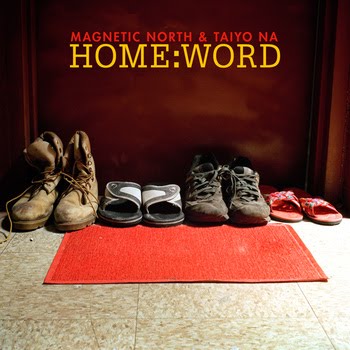
Home:Word


I am totally hooked on THIS ALBUM. I've sort of kept an eye on Magnetic North (a duo comprised of emcees Derek Kan and Theresa Vu) ever since I was introduced to their cover of "Drift Away." So when I learned that they collaborated with Taiyo Na, an artist whose work I've also recently come to admire, I had to buy the album right away. Besides, I'm always on the lookout for Asian American talent. Even better, socially conscious Asian American talent.

My favorite track is "We Belong," an anthem for Asian American empowerment that takes jabs at Rosie O'Donnell's ching-chong joke and Miley Cyrus's chinky eyes at the same time that it incisively comments on the model minority myth, refugee experience, and the lives of migrant workers. And on top of that, it's great to listen to, with a funky groove, singable chorus, and tight rhymes.

A friend of mine knows Vu, Kan and Na personally, and he says that they're fantastic people who are activists as well as artists. So support them and buy the album now!